Why Body Language Matters in Meetings
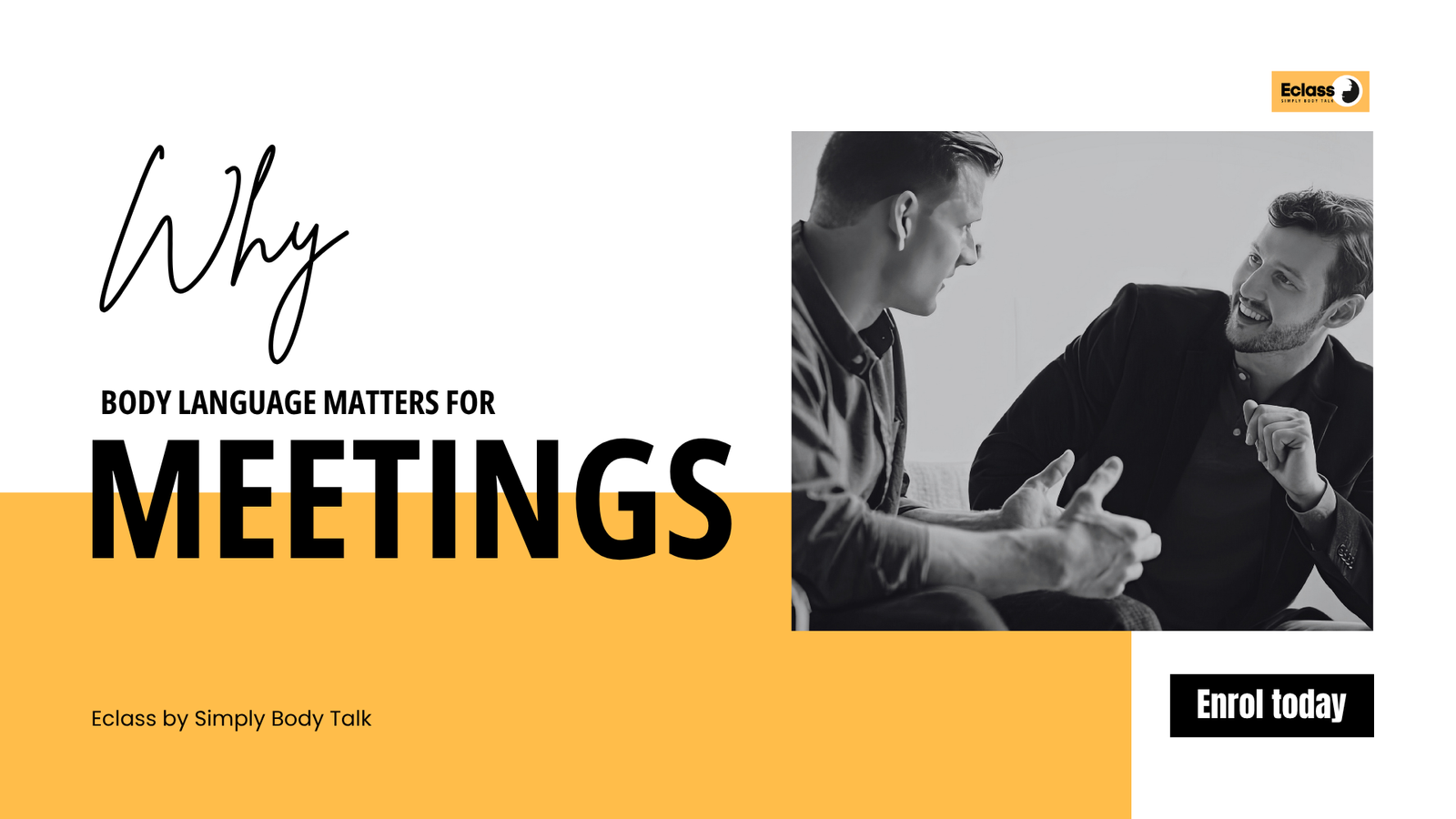
In meetings, communication is not just about what is said, but how it is expressed. Body language plays a critical role in shaping how ideas are received, how confident a person appears, and how much influence they have in discussions. Posture, gestures, eye contact, and overall presence often determine whether someone is taken seriously or overlooked.
Whether in in-person meetings or virtual settings, nonverbal communication affects visibility, credibility, and engagement. Developing the ability to manage and interpret these signals can significantly improve how effectively you communicate in professional environments.
Common Challenges in Meetings
Many professionals face challenges in meetings that are not always linked to their knowledge or preparation, but to how they come across.
Some common situations include:
- Having ideas but not being able to present them confidently
- Being interrupted or not getting enough opportunity to speak
- Feeling overlooked in group discussions
- Appearing unsure despite being well-prepared
- Struggling to maintain attention during virtual meetings
In many cases, these challenges are influenced by body language, including posture, facial expressions, and the way one responds to others during interactions.
How Body Language Influences Meeting Outcomes
Body language directly affects how others perceive and respond to you in meetings. Even before you begin speaking, your posture and presence create an impression. During discussions, gestures and facial expressions reinforce your message, while eye contact helps establish connection and confidence.
Effective use of body language can:
- Make your contributions more noticeable
- Improve clarity and impact when you speak
- Help you appear more confident and composed
- Increase engagement during conversations
- Support better interaction with colleagues and stakeholders
By becoming more aware of these elements, it becomes easier to communicate ideas in a way that is both clear and influential.
Body Language in Different Meeting Environments
In-Person Meetings
In face-to-face meetings, body language includes posture, gestures, and how you position yourself in the room. Sitting upright, maintaining open posture, and using controlled gestures can help convey confidence and professionalism. Eye contact and attentive listening also play an important role in building rapport and ensuring your presence is felt.
Virtual Meetings and Video Conferencing
In virtual meetings, body language needs to be adapted to the screen. Since visibility is limited, facial expressions, eye contact with the camera, and upper body posture become more important. Camera positioning, lighting, and how you present yourself visually also influence how others perceive you.
Maintaining engagement in virtual meetings requires a different level of awareness, as subtle cues can easily be missed. Adjusting your body language for video interactions can help you appear more confident, attentive, and professional.
Improving Communication in Meetings Through Body Language
Improving body language in meetings is not about dramatic changes but about developing awareness and making small adjustments consistently. This includes:
- maintaining open and confident posture
- using gestures that support your message
- managing facial expressions to reflect engagement
- observing how others respond and adjusting accordingly
Over time, these changes can significantly improve how you communicate and how your ideas are received in both in-person and virtual settings.
Your Learning Path
To develop these skills in a structured way, you can focus on different meeting environments:
- For workplace communication and in-person interactions: Creating Impact during Sales Meetings
- For virtual meetings and online presence: Mastering Business Video Conferencing
These body language courses online are designed to help you learn body language for meetings and apply it effectively across different professional situations. Both courses are self-paced and allow you to build these skills gradually based on your own schedule.
FAQ’s
Improving body language in meetings involves maintaining open posture, using the right gestures, and making consistent eye contact, as per the situation. These techniques help communicate confidence and ensure your ideas are noticed.
Feeling ignored in meetings is often linked to nonverbal signals such as closed posture, lack of eye contact, or hesitant gestures. Improving these aspects can increase visibility and presence.
Confidence in meetings is reflected through posture, voice alignment with gestures, and steady eye contact. Developing these skills helps in expressing ideas more effectively.
In virtual meetings, body language needs to be adapted to the screen. Eye contact, camera positioning, and facial expressions play a bigger role compared to in-person interactions.
Looking confident on video calls involves maintaining eye contact with the camera, sitting upright, and using controlled facial expressions and gestures.