



Dhurandhar, Underdogs and Real Influence
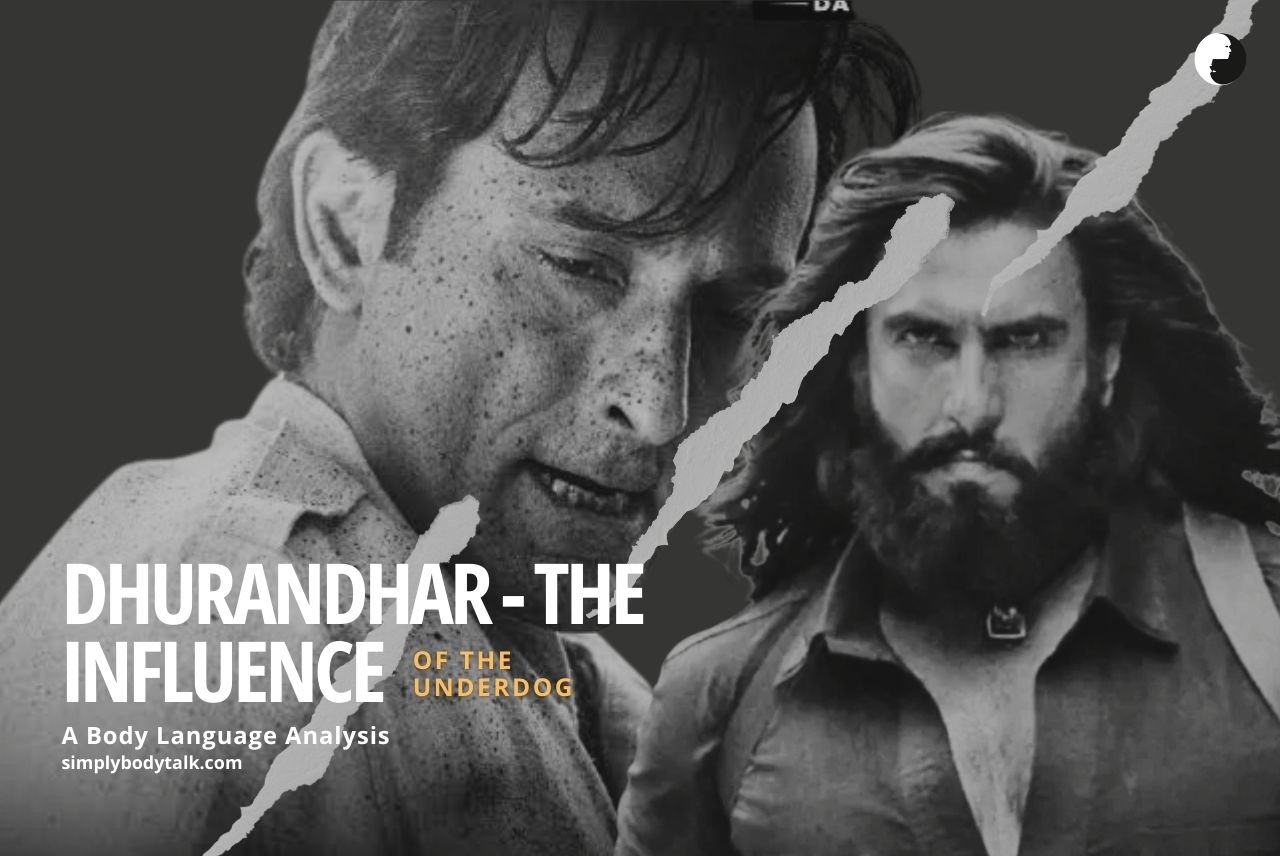
In the last few weeks, as Dhurandhar continues its run and audiences share their impressions, one particular debate has stood out-the discussion around the acting performances of Ranveer Singh and Akshaye Khanna, especially in the context of how the character dynamics evolved between Dhurandhar-1 and Dhurandhar-2. Many voices in online forums and discussions have argued that Akshaye Khanna’s portrayal was the more nuanced and impactful performance in the first part, to the extent that the creative team chose to rework his character for the next instalment. As someone deeply fascinated by human behaviour and nonverbal expression, my own instinctive reaction was this to deliberately underplay a character after having established a powerful screen presence as Ranveer has is itself a rare and difficult craft.

Ranveer deliberately underplaying his screen presence through minimal movements and expressions in Dhurandhar.
However, this article is not primarily about who was the “better actor” in Dhurandhar. Rather, it is about a phenomenon that the series brings into sharp relief: how a character who appears to be the underdog can quietly and subtly begin to shape the narrative, influence the direction of choices, and ultimately command outcomes without drawing overt attention to themselves.
Why We Misread Power in Social Situations
When we enter a room full of people, whether a meeting, a negotiation or even a social gathering, We almost instinctively scan to look for obvious markers of power: the person who speaks most, is the senior most, who stands or sits in a dominant position, who gestures widely, whose voice fills the space. We tend to equate visibility with authority, body size with control, loudness with impact. These are familiar markers, and they are often useful in orienting ourselves quickly in unfamiliar situations.
Yet what Dhurandhar illustrates, and what happens so often in real life situations, is that dominance and influence are not synonymous. While dominance is visible through body language, influence can be directional in shifting how decisions are taken. In Dhurandhar, there are moments where the apparently most prominent character of Rehman Dakait delivers dialogue, occupies the central frame, and asserts presence in the most cinematic ways.

Akshaye playing Rehman, widely appreciated for delivering performance that “overshadowed” other actors
However, this article is not primarily about who was the “better actor” in Dhurandhar. Rather, it is about a phenomenon that the series brings into sharp relief: how a character who appears to be the underdog can quietly and subtly begin to shape the narrative, influence the direction of choices, and ultimately command outcomes without drawing overt attention to themselves.

Hamza holding a pause before replying to whether Dakait should take revenge for his son’s murder – not possible unless he knows his opinion will carry weight
This insight may seem obvious because through this movie now an OTT series, we are seeing most of the story through the lens of Ranveer, playing the protagonist Hamza Ali Mazari. But translate this insight into how we usually interpret interpersonal dynamics in the real world.
Influence Under the Radar: Lessons from the Screen and the Room
In everyday professional and personal interactions, much of the power landscape lies beneath the surface. Leaders may appear in formal positions of authority, yet many of their decisions and directions are shaped by cues, inputs and validations that come from less visible sources. The person who speaks most forcefully is not always the one who ultimately determines the outcome. Nor is the loudest voice always the most persuasive.
What becomes interesting, and what Dhurandhar portrays with remarkable subtlety, is how influence builds not through volume, but through consistency, timing and strategic engagement.
For instance, rather than interrupting, the underdog character Hamza tends to observe. Rather than dominate the conversation, he positions his contributions at moments when they carry disproportionate weight. That is influence – not loudness, but leverage.
This dynamic parallels countless real-life scenarios where a seemingly quieter participant ends up shaping the direction of a dialogue, a plan, or a decision. I have encountered many a managers whom, when you meet, you may feel does not come across as assertive enough, but if the team has to take a decision or the leader wants a definite opinion, this manager will be consulted without doubt.
Spotting the Real Influencer in Real Life
This brings us to a crucial question that we should ask ourselves: how often do we misread influence for dominance? Or believe that work will be done just by reading the expressions of the decision maker?
When scanning a room, we instinctively look for power markers that are easier to decode – eye contact, gestures, seating hierarchy, vocal strength. What seldom registers in our conscious awareness is how others, especially those we consider more powerful, are responding to someone else’s presence. Who do they check with before finalising a point? Whose opinion do they seek in a subtle glance? Towards whom is their body oriented at times when they will be making the decisive call? These are the cues that reveal the unobserved influencer.
If you begin attending to these patterns, rather than equating loudness with authority, you will notice how often the apparent underdog is quietly shaping the narrative.
A real life case study
In fact, this dynamic is not confined to cinema or theory. One of my clients, an strategist, had once undergone a session with us on reading behavioural patterns and identifying influence within high-stakes rooms.
Several months later, he found himself facilitating a complex deal between two parties, one of which was being taken over. Amidst the financial models, projections and formal presentations, his attention was drawn not to the most vocal representatives, but to a senior, experienced woman whose contributions were consistently overlooked in the larger group discussion. She did not dominate the room, nor did she push her views aggressively; yet her nonverbal responses – measured pauses, restrained reactions to certain numbers, and subtle shifts in expression when specific assumptions were discussed – suggested deeper insight.
Recalling our work on influence beyond dominance, he chose to engage her separately after the meeting. That conversation proved pivotal. She shared contextual intelligence and qualitative insights that no volume of spreadsheet data over several months had surfaced. While this example differs in context from Dhurandhar, the underlying principle remains strikingly similar: the most valuable influence in a room is not always the most visible, but it is often the most decisive.
Conclusion: Obverse what matters
While Dhurandhar provides an engaging context to explore these themes, the implications extend far beyond cinematic critique. In leadership meetings, organisational strategy discussions and even everyday interpersonal conversations, influence rarely announces itself. It demonstrates itself through small, consistent, context-sensitive signals – the very signals that trained observers of human behaviour learn to notice.
The next time you find yourself in a room full of people, or watching a scene unfold on screen, pause and reflect before you decide who is in control. Rather than asking, “Who looks powerful?” ask instead, “Whose behaviour is shaping the powerful one?” This shift in perspective, from dominance to influence, is what separates shallow observation from deep understanding.
Just as in Dhurandhar, influence is often a quiet strategist – not always noticed at first glance, but unmistakable once you know what to observe. And understanding these nuances offers a competitive edge. It means you process information not just at the level of spoken content or visible gestures, but at the level of psychological impact. And that is what will help you to significanly shift your business outcome.
FAQ’s
How is influence different from dominance in leadership settings?
Dominance is about being noticed by speaking more, taking up space, or appearing confident. Influence is different. It is about shaping decisions and guiding the direction of a discussion, even without being the loudest person. Good leaders know the difference and focus on real impact, not just visibility.
Why do senior leaders often misidentify who truly holds influence in a room?
People often notice those who speak the most or have senior titles. But real influence is shown by who others trust, ask for advice, or look to before making decisions. These small behaviours often reveal who has the greatest impact.
What nonverbal cues indicate real influence during executive discussions?
Look for patterns instead of single gestures. Notice who people look at before making a decision, whose opinions change the direction of the conversation, or whose silence makes others pause. These are often signs of real influence.
How does quiet behaviour translate into disproportionate impact?
Quiet leaders often make a bigger impact because they speak at the right time. Instead of talking often, they share valuable ideas when they matter most. This helps them influence decisions more effectively.
Can behavioural intelligence be developed, or is it instinctive?
Some people naturally notice behaviour more than others, but behavioural intelligence can be learned. With training and practice, leaders become better at observing patterns and understanding people instead of relying on assumptions.