


Koffee With Karan Season 5 – Special Body Language Edition
Someone asked me today why I analyze Koffee with Karan episodes so religiously. One, we all connect with it, so it is easy for me to help you relate to the subject of body language. Two, the creators of the series claim to be paying specific attention to body language. But they talk only of broad observations of others’ body language. It is my hope to prove that this subject is as detailed as any other. Although observation is intuitive, we all miss out on details, unless we make special efforts to learn the subject well.
EPISODE 5: PARINEETI CHOPRA AND ADITYA ROY KAPOOR
Parineeti Chopra swears she would be alert in interviews and not let people read her through her facial expressions and body language. She misses the point. Her hair touching, foot tapping and ring fiddling are as good cues as expressions. Minor behaviors signal true intent even better than larger ones since we really don’t pay attention to them.

EPISODE 4: RANBIR KAPOOR AND RANVEER SINGH
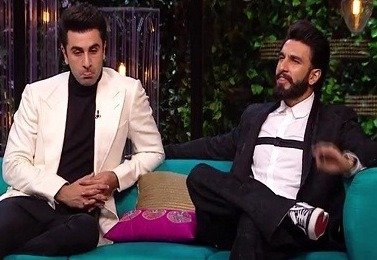
Surely you noticed that the camera zoomed in to show only the upper bodies? Else you might have noticed the feet jiggling of Ranveer when Ranbir was praising his relation with this elephant. Notice how he was shaking only so slightly during that tiny bit of the entire episode? Feet jiggling is an interesting behavior even interviewers notice on candidates. Though it happens under the table, the shaking of the upper body is a giveaway. Reason? Any psychological discomfort can cause this. Was Ranveer wanting the moment to pass away, or holding his breath in anxiety or just plain refraining himself from a slip of tongue? We would never know that easily! But we notice that the calm and collected boy lost his composure just for a few seconds.
PC: Firstpost
EPISODE 3: ARJUN KAPOOR AND VARUN DHAWAN
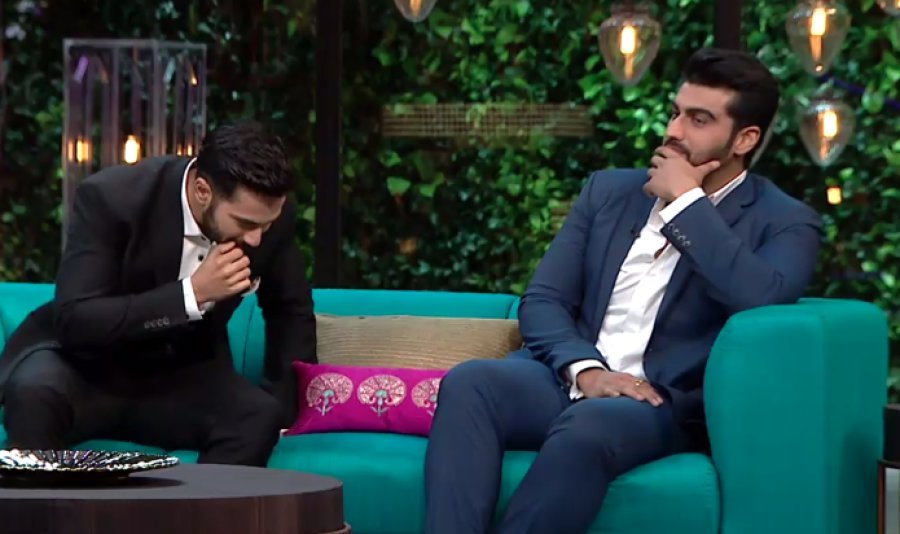
Noticed how Arjun Kapoor looked much cooler than Varun Dhawan? Answers were one thing. What about composure, especially during stress? Observe how #VarunDhawan shifts to edge of the sofa in Rapid Fire round. The stress was making him edgy, literally. During our times of stress, the limbic brain kicks in, ready to freeze, flight or fight. Here we see his brain making him ready for defense. Actors can fake a lot of confident body language. The trick is to know the genuine from the fake!
Episode 2: Akshay Kumar and Twinkle Khanna
I wrote a separate post on this since there is very interesting behavior which demand special analysis. You can read the post here.
FAQ’s
What are micro-behaviours in body language?
Micro-behaviours are small, often unconscious physical actions such as tapping a foot, touching hair, adjusting rings, or shifting posture. Because people rarely monitor these movements consciously, they frequently reveal underlying emotional states more accurately than deliberate facial expressions or scripted gestures.
Why do subtle body language cues matter in professional conversations?
Subtle cues often surface when individuals experience cognitive load, stress, or emotional discomfort. In leadership, recruitment, or negotiation contexts, these signals can provide additional context to what is being said, helping observers understand underlying reactions rather than relying on words alone.
How does stress influence body language during interviews or public discussions?
Under stress, the brain activates protective responses linked to the limbic system, often resulting in defensive or restless movements. Leaning forward abruptly, shifting position, or repetitive gestures can signal heightened alertness or psychological tension even when verbal responses remain controlled.
Can confident body language be deliberately performed?
To a certain extent, yes. People can consciously adopt behaviours associated with confidence such as controlled posture, steady eye contact, or measured gestures. However, sustained observation often reveals inconsistencies through smaller movements that are harder to consciously regulate.
How can leaders become better observers of nonverbal behaviour?
Improving observational accuracy requires structured practice. Rather than focusing only on obvious gestures or facial expressions, skilled observers learn to notice clusters of small behaviours, context shifts, and changes in baseline behaviour over time.