



Xi Confronts Trudeau at G20 - Body Language of Power
What’s creating waves today all over the internet is the face off between two world leaders – Chinese President Xi Jinping confronted Canadian Prime Minister Justin Trudeau at the Group of 20 summit, accusing him of leaking details of a private meeting between the men — an unusually candid glimpse at Xi’s interactions with other world leaders.
This short interaction was captured by the media and is doing the rounds where people are giving their own opinions on how this face off is good, bad, ugly from a political stand point. What, for a body language observer is interesting, is just how the power dynamics works in favour of Xi in this short interaction which lasts less than a minute. If you haven’t watched the video, I recommend you do that before reading the analysis below.
Drawing Conclusions and Highlighting Key Takeaways from the Body Language Exhibited by Xi and Trudeau during heir Confrontation:
The encounter between Xi Jinping and Justin Trudeau at the G20 summit offered valuable insights into the world of diplomatic interactions and the power dynamics at play. The body language displayed by both leaders during their confrontation provided significant cues that can be examined to draw conclusions and highlight key takeaways. Here are some lessons learned from their non-verbal communication:
#1. ASSERTIVENESS AND CONFIDENCE
Xi Jinping’s body language exuded a sense of assertiveness and confidence. His upright posture, direct eye contact, and firm hand gestures conveyed a strong presence and determination. This demonstrated his willingness to project power and maintain control in the situation. The lesson here is that projecting confidence through body language can have a significant impact on how one is perceived in high-stakes encounters.
#2. CALCULATED RESPONSESY
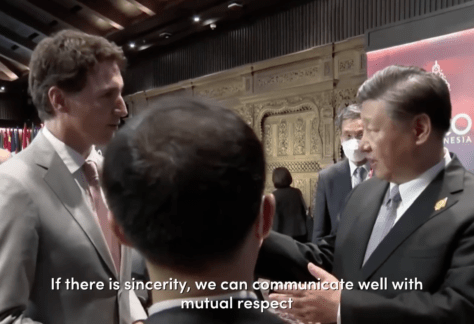
Justin Trudeau’s body language reflected a more measured approach to the confrontation. While maintaining an open posture and maintaining eye contact, Trudeau also displayed subtle signs of restraint, such as controlled hand movements and a composed facial expression. This suggested his intention to handle the situation diplomatically and not escalate tensions. The lesson learned is that controlled and calculated responses can help defuse confrontations and maintain a constructive dialogue.
#3. POWER DYNAMICS AND NON-VERBAL SIGNALS
The body language exhibited by both leaders highlighted the power dynamics at play. Xi’s dominant posture and gestures indicated his authority and desire to establish control. On the other hand, Trudeau’s more relaxed stance and measured responses signaled a willingness to engage while maintaining his own sense of authority. This underscores the importance of understanding and interpreting non-verbal signals to gain insights into the power dynamics between leaders.
#4. IMPACT OF NON-VERBAL COMMUNICATION
The encounter between Xi and Trudeau demonstrated the significant impact of non-verbal communication in diplomatic interactions. The world closely watched their body language, as it often speaks louder than words and can shape public perception and media coverage. Both leaders understood the importance of projecting a certain image and using non-verbal cues strategically to influence the narrative surrounding their confrontation. This serves as a reminder that leaders must be mindful of their body language as it can have lasting implications on diplomatic relations.
#5.CROSS-CULTURAL DIFFERENCES
Body language can be influenced by cultural norms and can vary across different contexts. It is crucial to consider cultural nuances when interpreting the body language of leaders from diverse backgrounds. Understanding these differences can help avoid misinterpretations and foster effective communication in international diplomacy.
CONCLUSION
In conclusion, the confrontation between Xi Jinping and Justin Trudeau at the G20 summit offered valuable lessons in understanding the power dynamics and nuances of body language in high-stakes diplomatic encounters. Analyzing their non-verbal cues provides insights into assertiveness, confidence, calculated responses, power dynamics, and the impact of non-verbal communication. By drawing these conclusions and highlighting key takeaways, we can better comprehend the intricacies of diplomatic interactions and their broader implications for international relations.
HOW WE CAN HELP
Enhance your teaching impact with our tailored programs focused on improving non-verbal communication. Learn to build stronger connections with students, manage classrooms effectively, and boost student engagement. If you are looking to upgrade your body language skills, check out our online pre recorded courses on various topics that come with lifetime access. You can also explore our Signature Body Language Personal Coaching program Reach out to us on – +9199309 41534.