



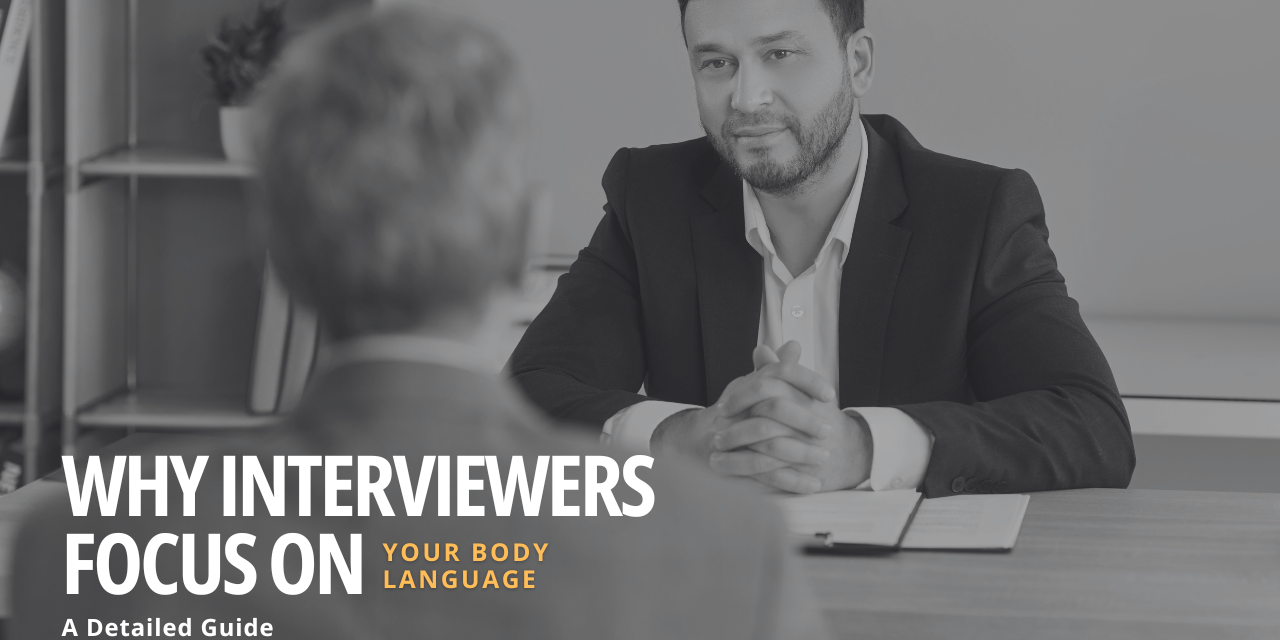
Whether one is appearing for an external interview or one for a job promotion, most candidates assume that interviewers are evaluating the quality of their answers. While that is certainly true, there is another question running silently in the interviewer’s mind:
Can I trust what this person is telling me?
This is where body language begins to play a significant role.
Over the years, while conducting workshops on body language and behavioural observation for interviewers—from HR professionals to Heads of Business and CXOs across different geographies—I have received some insightful feedback: Experienced interviewers are rarely looking for a “perfect posture” or “ideal eye contact.” Instead, they are trying to understand whether your behaviour supports what your words are communicating.
In other words, body language helps interviewers decide whether they can trust the competence they are hearing.
For professionals with ten or more years of experience, this becomes even more important. At this stage, organisations are not simply hiring knowledge or technical expertise. They are hiring judgement, influence, composure and leadership potential—qualities that are difficult to assess through answers alone.
Why Interviewers Pay Attention to Body Language
Every interview is essentially an attempt to predict future behaviour. The interviewer is not trying to understand how you will behave during the next sixty minutes.
They are trying to imagine how you are likely to behave six months after joining the organisation.
- Will you remain composed during a disagreement with a client?
- How will you react when your recommendation is challenged by senior leadership?
- Can you influence stakeholders without becoming defensive?
- Will you collaborate across teams?
The answers you give certainly contribute to this assessment. However, your behaviour while giving those answers often provides equally valuable information.
This is why experienced interviewers observe behaviour continuously throughout the conversation instead of only evaluating individual responses.

Interviewers Look for Congruence Between Words and Behaviour
One of the strongest indicators interviewers look for is congruence. Congruence means that your verbal communication and your nonverbal communication should support each other.
Imagine a candidate saying,“I’m very comfortable presenting to senior stakeholders.”
If that statement is accompanied by steady pacing, composed breathing, relaxed facial expressions and confidence that remains consistent even when challenged, the message feels believable. Now imagine the same statement delivered while the candidate repeatedly withdraws eye contact, rushes through sentences, fidgets whenever questioned and visibly loses composure during follow-up questions.
The interviewer does not necessarily conclude that the candidate lacks presentation skills. However, they are likely to wonder whether the confidence being described actually exists in practice. This is why body language should never be viewed separately from communication. Interviewers are constantly evaluating whether your behaviour reinforces or contradicts your words.
Why Consistency Matters More Than Confidence
One misconception candidates often have is that interviewers are looking for confident body language. In reality, experienced interviewers understand that interviews are stressful. They do not expect candidates to appear perfectly relaxed throughout.
What they do observe is consistency.
- Does your communication remain largely steady throughout the interview?
- What happens when the conversation moves from familiar technical topics to unfamiliar situational questions?
- Do you become visibly defensive when your assumptions are challenged?
- Does your pace suddenly accelerate when discussing failures?
- Can you recover naturally after making a mistake?
Behaviour under changing situations often reveals far more than behaviour during comfortable conversations.
What Interviewers Observe Across Multiple Interview Rounds
For many experienced professionals, interviews are rarely limited to a single interaction. You may speak with HR, a hiring manager, functional leaders, business heads and, in some cases, senior leadership.
Each interviewer may be assessing different competencies, but most organisations today use structured evaluation parameters. While technical capability may vary across interview rounds, behavioural observations often influence how candidates are rated against competencies such as collaboration, stakeholder management, communication, executive presence or leadership potential.
Interestingly, candidates sometimes assume they can “start over” in every round. But that’s a big mistake as interviewers often compare notes.
If your responses consistently demonstrate composure, thoughtful listening and adaptability across different interviewers, it strengthens the overall impression. Equally, if impatience, defensiveness or rigidity appears repeatedly under different circumstances, those behavioural patterns become difficult to ignore.
It is consistency, not isolated performances, that helps interviewers build confidence in their hiring or promotion decision.

Body Language Is Judged Differently at Different Career Levels
If you have reached this far into the article, you are probably preparing for an interview yourself. Well, one aspect to never overlook is that interviewers are not looking for exactly the same behaviours at every designation.
The expectations evolve with responsibility.
For experienced individual contributors
Someone moving into a senior specialist role is often expected to demonstrate ownership, collaboration and problem-solving ability.
For such interviews, the interviewers may observe whether the candidate listens carefully before responding, explains complex ideas with clarity, remains receptive to alternative viewpoints and communicates with enough confidence to influence peers.
Your composure reflects how reliable you will be in the next role:
- Can this person handle pressure without becoming flustered?
- Can they represent the team effectively?
- Can they work independently without constant supervision?
For managers and people leaders
Once the role involves managing people or influencing business decisions, body language takes on additional meaning. Interviewers begin paying closer attention to how candidates respond to ambiguity, disagreement and challenging scenarios.
For example, imagine being asked: “Your senior leader rejects a proposal that you strongly believe in. What would you do?”
While the verbal answer matters, interviewers are equally interested in observing how you process the situation.
- Do you pause and think?
- Do you immediately become defensive?
- Can you explain your viewpoint calmly while also acknowledging the possibility of adapting your approach?
Steadiness under pressure often becomes an indicator of leadership maturity.
Interviews depending on size of organisation
Body language is evaluated slightly differently depending on whether you are interviewing for a completely new organisation or for a role within a company where people already know you. In a large organisation where nobody has worked with you before, interviewers establish a behavioural baseline during the interview itself. Every interaction helps them understand your natural communication style.
However, for professionals moving into senior positions—or even those applying to organisations where references, industry reputation or prior interactions exist—the interview is not the only determining factor while taking the decision to promote.
Senior leaders often ask themselves a slightly different question: “Is the behaviour I am seeing today consistent with the professional this person has demonstrated themselves to be over time?”
This consistency between reputation, interview behaviour and references builds credibility. When all three align, trust develops much faster.

Interviewers Are Looking for Readiness, Not Just Capability
As careers progress, interviews become less about proving you can perform the current job and more about demonstrating that you are ready for the next one.
So for this week, while you are prepping for your interview, consider thinking through these questions:
- Can you remain calm while discussing uncertainty?
- Can you communicate disagreement respectfully?
- Can you balance confidence with openness?
- Can you listen without appearing passive?
- Can you influence without dominating?
These behaviours are difficult to fabricate consistently over the course of a long interview. They tend to emerge naturally, which is why experienced interviewers pay such close attention to them.
So, Is Body Language More Important Than Your Answers?
Not at all. A technically weak answer cannot be rescued by excellent body language. However, strong answers become significantly more convincing when your behaviour reinforces them.
Think of body language as the evidence that supports your spoken communication. Your words explain your competence, your behaviour helps interviewers believe it.
For experienced professionals especially, interviews are no longer examinations of knowledge alone. They are assessments of how you think, how you influence, how you respond under pressure and how you are likely to represent the organisation once you join it.
That is precisely why interviewers continue observing long after you’ve answered the question.
How We Can Help
At Simply Body Talk, we work with professionals across different career stages—from experienced individual contributors to senior leaders—to help them understand how their communication is perceived in high-stakes situations such as interviews, leadership interactions and executive presentations.
Our coaching goes beyond learning “correct” body language. We help professionals develop communication that is congruent, credible and aligned with the level of responsibility they aspire to take on. You can contact us or simply reach us on +91 99309 41534.
If you are a fresher considering taking your first interview, or a young working professional, consider our interview course.
External References
- Ambady, N. & Rosenthal, R. (1993). Half a Minute: Predicting Teacher Evaluations from Thin Slices of Nonverbal Behavior. Journal of Personality and Social Psychology.
- DeGroot, T. & Gooty, J. (2009). Can Nonverbal Cues Be Used to Make Inferences About Leadership? The Leadership Quarterly.
- Harvard Business Review: Amy Cuddy’s article: Connect, Then Lead.
- The Handbook of Nonverbal Communication (Matsumoto, Frank & Hwang)

This blog explains why interviewers closely observe body language, highlighting how confidence, eye contact, posture, and nonverbal communication influence first impressions, interview performance, and overall hiring decisions.