



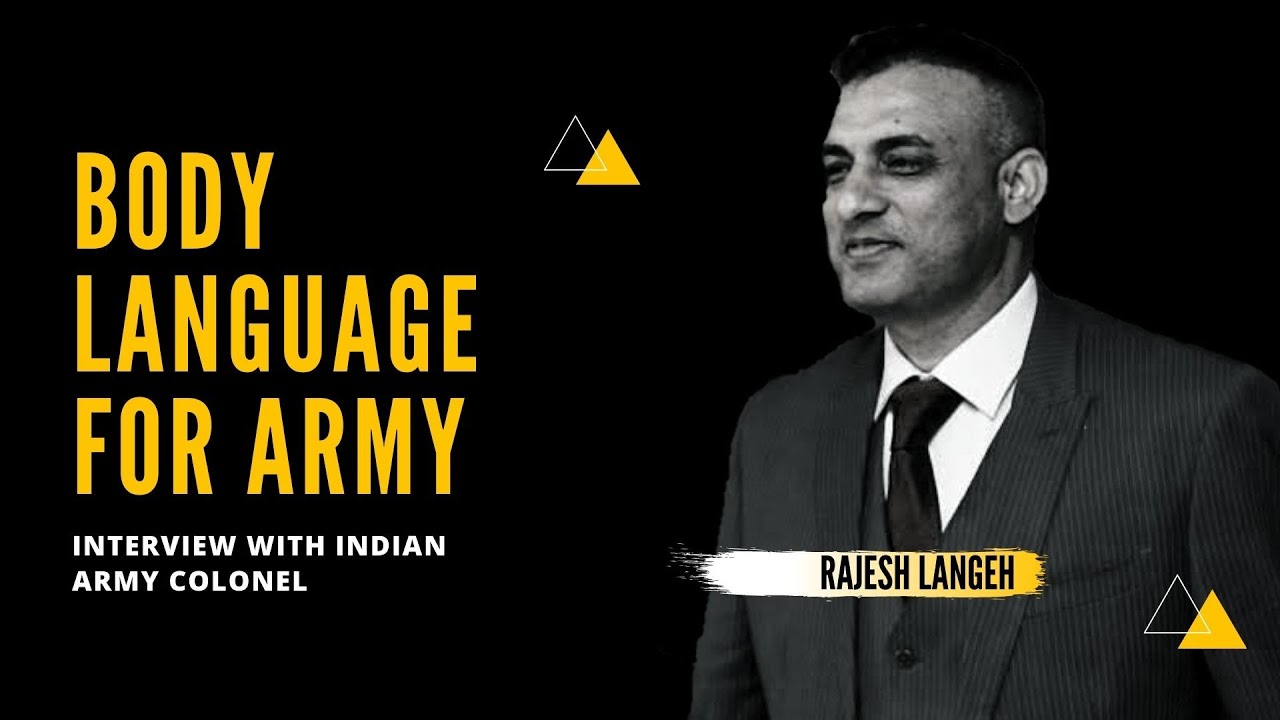
Military colonel in the Indian army discusses how the army uses Body Language
ABOUT RAJESH LANGEH
Col. Rajesh Langeh on how the Army can benefit from nonverbal communication. It is great to learn from an individual such as yourself who maintains the highest standards of nonverbal communication on and off the battlefield, We salute the sacrifices you have made for our country and are grateful for the advice and expertise you have shared with us. Stay safe and Jai Hind!
VIEW INTERVIEW VIDEO
ABOUT INTERVIEW SERIES
Simply Body Talk salutes experts who understand the essence of nonverbal communication in taking their professional expertise to a different level. Watch more Expert interviews here
HOW WE CAN HELP
Enhance your teaching impact with our tailored programs focused on improving non-verbal communication. Learn to build stronger connections with students, manage classrooms effectively, and boost student engagement. If you are looking to upgrade your body language skills, check out our online pre recorded courses on various topics that come with lifetime access. You can also explore our Signature Body Language Personal Coaching program Reach out to us on – 99309 41534.
FAQs
How does nonverbal communication work in military leadership?
In the military, body language often communicates before words do. Posture, eye contact, movement, and staying calm show confidence, authority, and control. These signals help people understand instructions quickly, especially in fast-moving situations.
What can corporate leaders learn from military body language?
Military leaders build trust by staying calm and consistent in their behaviour. Corporate leaders can do the same by using confident body language, staying composed, and remaining steady during change, conflict, or uncertainty.
Why is body language important in team decision-making?
Team members constantly notice a leader’s body language, even without realizing it. These nonverbal signals help create trust, show urgency, and keep everyone aligned before any instructions are spoken.
How does body language improve leadership credibility?
People trust leaders more when their body language matches their words. Leaders who stay calm, avoid showing unnecessary tension, and communicate with confidence are seen as more reliable, especially under pressure.
Can nonverbal communication be learned, or is it natural?
Some body language comes naturally, but most leadership skills can be learned. With practice, observation, and feedback, anyone can improve their nonverbal communication. The military treats body language as a skill that can be developed and improved over time.