



Tips For HR Managers To Be Able To Decode Difficult Situations Better
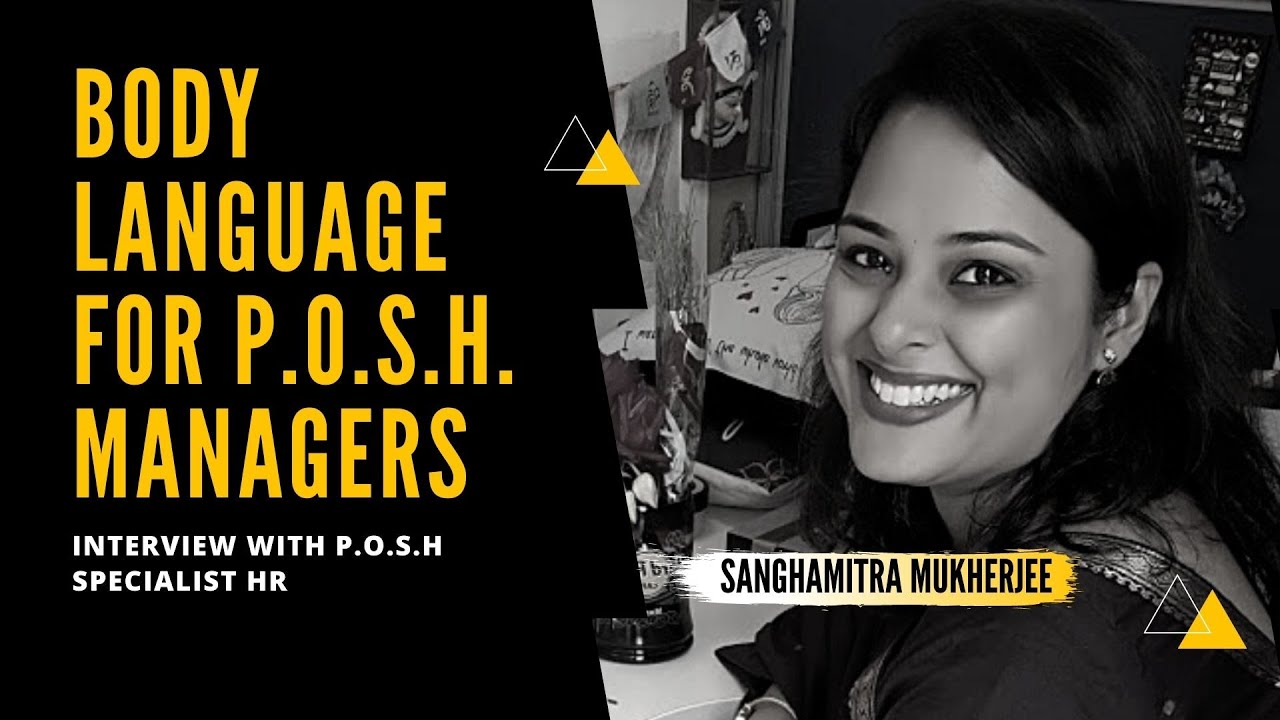
MEET OUR NEW NONVERBAL CHAMPION Ms. SANGHAMITRA MUKHERJEE
Discover with Sanghamitra Mukherjee how
ABOUT Ms. SANGHAMITRA MUKHERJEE
Sanghamitra is Human Resource Professional with rich work experience in Plant & Corporate HR & IR. Handled specialist roles around Talent Management, Leadership & Capability Development, Organizational Development & Effectiveness & Diversity & Inclusion as well as Business Partnering responsibilities of large and diverse teams.
Accredited ACC Coach by ICF , Certified in High Performing Teams and Organizational Culture Inventory by Sokrates, MBTI Practitioner, Q12 by Gallup and Thomas Profiling by Thomas Assessments
VIEW INTERVIEW VIDEO
HOW WE CAN HELP
Enhance your teaching impact with our tailored programs focused on improving non-verbal communication. Learn to build stronger connections with students, manage classrooms effectively, and boost student engagement. If you are looking to upgrade your body language skills, check out our online pre recorded courses on various topics that come with lifetime access. You can also explore our Signature Body Language Personal Coaching program Reach out to us on – 99309 41534.
FAQ’s
How can HR leaders use nonverbal cues to better interpret difficult workplace situations?
Nonverbal cues provide contextual data that language alone often obscures. Patterns such as incongruence between words and behaviour, hesitation, or defensive posture help HR leaders assess emotional load, perceived threat, or uncertainty. This supports more balanced judgement, particularly in high-stakes conversations.
Why is body language especially relevant in conflict resolution and investigations?
Conflict compresses honesty and increases self-protection. In these moments, nonverbal behaviour often reveals stress responses, power dynamics, and emotional alignment. Observing these signals allows HR to ask better questions rather than rush to premature conclusions.
Can nonverbal observation improve the effectiveness of employee coaching?
Yes. Coaching becomes more effective when HR recognises behavioural readiness. Subtle signals engagement, resistance, withdrawal indicate when to challenge, when to pause, and when reflection is required. This shifts coaching from instruction to calibrated influence.
How should HR approach nonverbal cues in sensitive cases such as harassment complaints?
Nonverbal observation should inform inquiry, not replace due process. Behavioural cues help HR assess emotional congruence and stress patterns, supporting more precise follow-up questions. They reduce reliance on assumptions while maintaining procedural integrity.
What distinguishes trained behavioural observation from intuition?
Intuition is impressionistic; behavioural observation is structured. Trained HR professionals look for clusters, baselines, and deviations rather than isolated gestures. This reduces bias and improves consistency in judgement across complex cases.