



Presentation Tips From Inspirational Leaders’ Body Language
This article is a tribute to the presentation style of world leaders who are an inspiration for all of us. Today we are going to break down their body language to see effective strategies they use to connect with their audiences.
STYLE ONE: EYEBROW RAISE
Here we have the CEO of Rolls-Royce Holdings Warren East. Warren creates emphasis through his body language. He uses an Eyebrow raise for highlighting crucial points. We have seen many leaders use eyebrow raise. Below is an example of Sergei Brin cofounder of Google. He also raise his eyebrows for emphasis. Nonverbally this creates an effective impact on the audience.
Tip- Practice eyebrow raise for highlighting important points.


STYLE TWO: EYE CONTACT
Most of us know Barack Obama is a great presenter. The former US president knows how to aptly use body language for mesmerising his audience. Regardless of the size of his audience, Obama makes it a point to maintain eye contact with them, tweaking the finer details of the eye contact as per the type of setting and style of audience. Eye contact helps to establish connect with your audience quickly.

STYLE THREE: HAND GESTURES
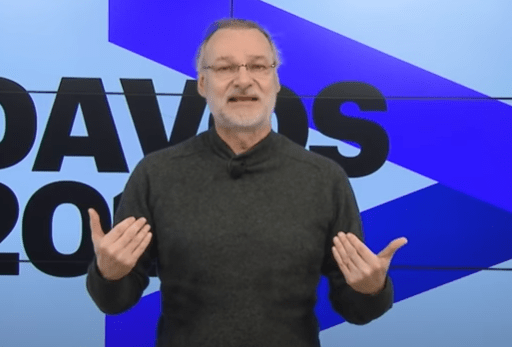
Obama also uses highly effective hand gestures. Speaking of hand gestures we have the CEO of Accenture Pierre Nanterme who loves to use his hands while presenting. What’s most noteworthy is while using hand gestures, his thumbs are up. When thumbs are visible nonverbally, it’s a sign of high confidence. Using hand gestures helps to explain your points more precisely.
Tip – While using hand gestures, make sure your thumbs are visible to project high confidence.
STYLE FOUR: EFFECTIVE PAUSES
Any discussion of inspiring individuals is incomplete without her. Oprah Winfrey’s followers list is endless. Her style of presentation is highlighted by how seamlessly she modulates her voice. She also uses pauses very effectively. As a presenter, pausing helps you to engage your audience by highlighting points that are important for you as a speaker, and for them to notice. Siddharth Bindra MD of Biba uses pauses for not only creating an impact but also engaging his audience.


Tip- Try to take a pause while presenting at the right time
These are few crucial points which one needs to adhere while presenting. But there are many more. Also the kind of body language required for a particular situation or audience would be different for some other situation. If you like to follow great presenters, here is the most important tip of all – try and look up their presentation style in different setups. See how these keep varying and that would tell you that the true inspirers have a guiding tool of body language which keeps shifting as per the occasion.
HOW WE CAN HELP
Enhance your teaching impact with our tailored programs focused on improving non-verbal communication. Learn to build stronger connections with students, manage classrooms effectively, and boost student engagement. If you are looking to upgrade your body language skills, check out our online pre recorded courses on various topics that come with lifetime access. You can also explore our Signature Body Language Personal Coaching program Reach out to us on – 99309 41534.
FAQ’s
How does body language influence leadership credibility during presentations?
Body language acts as a credibility filter. Subtle cues such as measured eye contact or controlled pauses signal confidence and intent before content is processed. Senior audiences often assess behavioural alignment faster than verbal logic.
Why are small nonverbal cues, like eyebrow movement, behaviourally significant?
Micro-signals draw attention without interruption. An eyebrow raise or brief pause can nonverbally mark importance, guiding audience focus while maintaining conversational flow rather than performative emphasis.
What distinguishes effective eye contact at senior leadership level?
It is less about duration and more about precision. Effective leaders adjust eye contact based on group size, hierarchy, and cultural context, using it to create inclusion without appearing performative or dominant.
How do hand gestures affect perceptions of confidence and authority?
Gestures clarify thinking when they are aligned with intent. Open gestures such as visible thumbs tend to signal comfort and conviction, whereas restricted or inconsistent movements can dilute perceived confidence.
Why is behavioural adaptability more important than fixed presentation techniques?
Because influence is situational. Leaders who rely on rigid techniques risk behavioural mismatch. Those who adapt their nonverbal signals to context demonstrate higher behavioural intelligence and situational awareness.